-
SALOON DION: THE TOUR DIARIES – FALMOUTH CONT.

The boys in Falmouth “What the fuck lads … where did Tom go?”
“Let’s call him,” said Dave. “Ah, he’s not picking up”
“He’s probably sleeping somewhere” replied Ben. “Maybe he went to the van?”
“Yeah, yeah, that’s gotta be it man. He’ll turn up anyway, let’s go get some scran, I’m starving”
After consuming quite possibly the worst breakfast in Falmouth, we decided it was time to head back to the van and awaken Tom from his slumber. As we drew closer to the van, we noticed that the back door had been left slightly ajar, presumably so that Tom didn’t suffocate from his own flatulence throughout the night. Yet, when we threw the door open, like a mother opening the curtains on her teenage son’s bedroom, there was no Tom to be found.
“Okay, this is starting to take the piss now”Scanning the van for any signs of thievery, we let out a collective sigh of relief upon seeing that what little personal belongings we had still remained. As the frustration of discovering an unlocked tour van wore off, the worry began to settle in.

Charity Shop CCTV in Falmouth Time was pressing on – morning had ticked into afternoon, and we needed to start the journey from Cornwall to Cardiff for our second night of tour. Tom’s phone still wasn’t ringing, no one from the student house knew where he was, and to top it all off, he had the keys to the van.
There is a lot of water in Falmouth, and the very real concern that Tom may have somehow fallen into the ocean wasn’t far from our minds. We decided to split up to cover more ground – Ben and Dave stayed at the van, with squawking seagulls and the jazz-lounge muzak of 111 filling the gaps between worried conversation. I headed to the venue thinking that Tom may be sat there waiting for us. Luke enlisted the help of two good friends, Georgia and Karum, to start searching the town for any sight of our beige-wearing, mullet-touting, Bristolian-sounding guitarist.
An hour passed by, and just as we had decided that it was time to call the RNLI, a dishevelled and bleary-eyed Tom arrived at the van.
It turned out that after we had all gone to bed, Tom had stayed up drinking beers and chatting with the few remaining night dwellers. When some old wanker decided to make racist remarks to another fella at the party, Tom stood up, and told that old wanker to fuck off. Forming a near instant friendship, Tom headed back to his new mucker’s house to continue partying into the early hours of the morning. Around 7am he passed out on the sofa, proceeded to sleep through the near one hundred missed calls made by the Saloon boys, and then frantically hurried his way through Falmouth to get back to the van.

Live in Falmouth – Photo by Kieran Webber of Clunk Magazine Relieved, although slightly miffed, and increasingly anxious about reaching Cardiff in time for soundcheck, the boys jumped in the van with Tom behind the wheel and hurried their way to The Cornish Bank to collect the gear.
No more than a hundred yards after setting off, Tom crashed the van.
As he hurried his way down one of Falmouth’s notoriously narrow lanes, another van had come hurtling up the street towards him. In a split-second decision, Tom veered the van to the left, narrowly avoiding the oncoming speed-demon Transit, but coincidentally smashing the wingmirror of a parked roadside van.
The collision occurred with such force that our own wingmirror also became dislodged and dangled off the vehicle, held together only by broken plastic and torn electrical cables.
We left our contact details with a passer-by who happened to be the neighbour of the man’s van we smashed. We then proceeded to secure our wingmirror back in place with a few rolls of duct tape and continued our journey to The Cornish Bank.
Eventually reaching the venue, the boys piled out of the van and began loading up the gear. As Tom headed to the front door, turning his back to us whilst doing so, a collective gasp filled the air.
“Tom, what the fuck is that?” said Dave.
“What do you mean?” He replied.
“Your trousers, they’re covered in shit. You’ve shat yourself.”
“You’re joking” replied Tom as he turned to look at the brown mess that had engulfed his beige trousers. “I can’t believe it. I must have shat all over that guy’s sofa as well. This is awful”.
“You’ve got to take those trousers off now mate, that is horrible”.
Leaving Tom in a side alley to dispose of his soiled underwear, we continued loading up the van.
After finally setting off, we stopped on the outskirts of Falmouth to re-fuel and grab ourselves a few snacks for the journey ahead. Eager to assess the damage below the waist, Tom asked if Luke wouldn’t mind taking a quick photo of his ass. As any good friend would, Luke obliged, and Tom proceeded to lower his trousers.
It was at this moment, that a young Cornish couple pulled up alongside our parked van, leant out their window and congratulated us on last night’s performance.
Like rabbits in the headlights, we turned as one to face the source of kind words, locking eyes with the couple as they began to take stock of the scene they had just stumbled upon.
“Ah thank you so much” we all replied, as their car windows, and Tom’s trousers were lifted up in perfect synchronicity.
Freshly clothed, and somewhat cleaner after his service station wash down, Tom hopped back in the van, and we started the journey to Cardiff.
It was going to be close, but we were going to make it in time for the gig.

Photo by Keiran Webber of Clunk Magazine -
The Private and The Property: An Interview With Adam Bailey

Adam Bailey is a street and social documentary photographer from the South-West of England.
Since first picking up a camera seven years ago, Adam has gone on to shoot numerous projects in locations such as Turkey, Iceland, and Portugal. Yet it is the South-West of England, his birthplace and home, which forms the bedrock of Adam’s photographic practice.
Endless hours spent wandering the streets of Bristol and Plymouth has instilled in Adam a deep appreciation for the unpredictability and ever-changing dynamics of the urban environment. Fleeting glimpses of compelling individuals, conversations with strangers, and moments of adoration are just some of the elements that frequent his work.
Ahead of the release of Adam’s first book, The Private and The Property, we sat down to discuss interesting hairdo’s, difficult encounters, and the scars of a city heavily affected by war.
First question, how did you get into photography?
I remember one of the first film photos I ever shot, it was of my friend James. We were travelling in Europe at the time, and he had this Leica camera. I didn’t understand how good it was… He leant it to me, so I shot a couple of rolls, mainly of him. Then later in the trip, we were skating down a hill and I ollied a drain, the camera came out of my hand and smashed on the ground. It never worked after that, and James still holds me accountable. But yeah, mostly through James, he showed me a lot of stuff, different photographers, and all that.
You ever have to pay up for the Leica?
No, actually. But I’m now in his debt forever.
So, you started with film and decided to stick with it?
Yeah, I think I’ve shot digitally once, maybe twice. I got commissioned to photograph a taxidermy event, and a yoga event as well. I can’t say I like shooting digital that much… but this could be because I haven’t found the right camera yet. Maybe one with a digital range finder would be a good fit, and it would definitely save me a lot of money. Then again, nothing beats the excitement of collecting film from a developer, I feel like a little boy on Christmas morning every time.
Where do you draw your inspiration from?
For this book specifically, it was a gritty, raw, honest kind of image. I was heavily inspired by photographers like Mark Cohen and Bruce Gilden who worked very close to their subjects, which is something I found really hard to do. That in itself seemed like a challenge. The closer I could get to somebody, and take a good photograph, that seemed worthwhile to me.
It shows doesn’t it, some of the shots you’ve taken, the details and facial expressions, you never would have got that if you weren’t in that space.
Yeah exactly, you’ve got to try and be in that space, and be candid and try not to be too noticed in order to affect their expression or behaviour. Once you get noticed it can ruin it.
Do you feel like your presence can sometimes influence a scene, or do you feel like you’re simply observing what’s going on?
I guess more observing, my presence can definitely affect the scenario for sure, both in a good way and in a bad way. There are times when you can be in a scenario and it can take a little bit of chat to lead you to the next image, the next scene. You can just be hanging out, chatting to someone, and then this person is like “oh yeah my friends around the corner are doing this or that” and then just by being involved in that interaction you come across different things.
It sounds like an organic process…
Yeah, it can be very mutual. Both parties can get enjoyment out of it, and generally speaking, people do like to have their photo taken. It’s like admiring them, that’s how I like to look it at, rather than exploiting the situation.
So, your first book The Private and The Property is coming out mid-February. Tell me about that…
So yeah, the book is called The Private and The Property. It’s based in Plymouth and linked to the Navy scene, and also the architecture of Plymouth and how that affects the people that move within it. It’s all black and white and shot between 2016 and 2017.
How do you feel about putting your first book out into the world?
It’s pretty terrifying. I feel very exposed, I don’t even post that much on Instagram. I feel like with a book, you open yourself up to criticism, and also gratification. People will hopefully like it, but you do have to be open to what anyone says and how they feel about it. There’s also the other element of failing, you know, if nobody liked it. But to be honest, I feel like just creating it is an achievement in itself. I’ve got to make something that I can back and also be happy to put out there for other people to look at.
Do you feel like there’s a difference in putting things out there physically compared to digitally?
Yeah, I think so. It’s quite easy to put things online and for them to be lost. I think that the financial side of it as well… it’s a risky investment.
Do you have a favourite photo from the book, can you tell me about its back story?
I think it’s the two gypsy ladies. The story isn’t that fascinating to be honest. I was just walking around the corner and noticed these two ladies really close, just behind one another, with very interesting headscarves and amazing hair. It was one of those moments where I bent down, got a low angle, and just clicked… man, it just worked out.

The lady in the front has some barnet doesn’t she.
Yeah, it’s incredible, she didn’t even mind, didn’t even think twice, just walked on by.
Do you think the hair’s real?
Yeah, I think so, it was a good five or six inches tall. I saw some crazy hairdos. There was this one guy in Plymouth, I don’t know if he was bald, but he had hair glued on to his scalp. It almost looked like it had been tarred on. I was trying to photograph him the whole time I lived there. I’d be on the bus going somewhere and I’d see him and be like “there he is!” But I never managed to get a shot of him.
Your photography is what I’d consider as ‘up close and personal’ – have you ever had any difficult encounters when shooting?
It definitely can happen. The initial impression people give is shock and then it can go one of two ways, they’re either surprised, which can be a sort of happy surprise, or it can be a very negative thing, and they’re just like “why?” If that happened, I would tell them why I took their photograph, straight away, and in the form of compliment, for example, to the gypsy lady I would say “I love your hair, I think it’s fantastic, that’s why I took your photograph”.
One time in Plymouth a woman did get really angry, said she was going to call the police and tried to make me stand on the spot and wait for them. I just tried to calm her down… she’s actually the first photo in the book. She was really angry. There’s another guy in the book, the one who has the breathing apparatus on his face, he was not happy. He took off his mask and shouted, “you’re taking the piss mate”. But again, Plymouth is very small, and I’d seen him maybe two or three times before, and that day I finally plucked up the courage. My heart was racing for that one, I couldn’t stop, he was so riled up I just had to move on. Normally I do try and console, but I just couldn’t do it that time.
Why do you think he got angry?
I think maybe he was self-conscious, maybe he thought I was mocking him. Now my ethics have changed, and I feel guilty, just for the fact that my actions have upset him, I was younger then.
Do you feel like that ethical awareness has affected your current photography?
Yeah, I think so. My style has completely changed since this first book, I don’t tend to run in to ethical issues, I’m not going up and getting as close to people. There’s often a lot of subjects in my photos now. Often the person that I’m shooting doesn’t actually know that they are being photographed, because it’s almost like a scene rather than an individual shot.
Do you find it important to keep challenging yourself?
I think so, it’s definitely what drives me.
It’s been a while since you lived in Plymouth, do you feel your perception of that time of your life has changed?It’s definitely a time in my life I can now reflect back on. Looking at these people and seeing how the city has reflected on them, how it’s almost reflected on to me as well… it’s like we have a mutual understanding of the place together.
You mentioned before we started this interview that this book is dedicated to your Grandparents, tell me a bit more about that…
My grandad grew up in Plymouth and was very proud of it. Later in life, my nanna married him. They lived together in a house which over looked the River Tamar and you could see Plymouth in the distance. I remember being a kid, and we would be out at night collecting logs or something, and you could see the urban glow of the city. My nan would look at that glow and tell me how similar it felt to the blitz. She would often take us in to the city to go shopping, and I think I associated her and my grandfather with Plymouth. The view from their house is imprinted in my brain and from knowing all the war facts she would tell me and how I would then walk through the city, understanding it’s scars, how it had affected the people, how it had affected her, I think that’s what also led to me photographing it as it did.
What’s next for Adam Bailey?
To finish my next book which I’ve been working on for 4 years. It starts in black and white, with some similar shots to my Plymouth book, and then eventually it moves in to colour and focuses on Bristol.

The Private and The Property is available to purchase from the 10th of February via https://www.adampbailey.com/.
Keep up to date with Adam’s work by following him on Instagram @adspbailey.
-
Veganuary: What’s the point?

Ah, January. A month synonymous with over-crowded gyms, alcohol-free weekends and now, veganism.
This year, there are expected to be over 2 million people taking part in the annual one-month challenge, Veganuary. Much like a big wheel of vegan cheese rolling down a hill, Veganuary has gathered remarkable momentum since it’s humble beginnings in 2014. This year, even large corporations such as Harrods, Volkswagen UK and Superdrug have signed up to the Veganuary challenge, citing sustainability as their foremost incentive to do so.
But what does Veganuary actually accomplish?
One of the great things about Veganuary, is that as more people stop consuming animal products, more companies start to create vegan products. When I first switched to veganism (almost 9 years ago now) there were only a handful of plant-based products in British supermarkets. Now, there are tens-of-thousands to choose from, including a delicious vegan camembert by Nurishh who happen to be sponsoring this article. That was a lie. I have no sponsors. But Nurishh, if you’re out there, you know where to find me.
The point is, Veganuary creates supply and demand, which is a good thing when it comes to putting more vegan products on shelves.
Let’s imagine that you are the CEO of Cadbury. You’ve started to notice that less people are buying your products and your brand because they no longer want to eat chocolate made from cows milk. Suddenly, the folks over at Mars are like, “you know what, fuck it, we’re going to make some plant-based Galaxy and it’s going to be delicious”. Instead of saying “that’s cool Mars, you go ahead and keep those plant-based customers and their money”, you’re going to say, “no way are those Martian bastards keeping all that plant-based custom to themselves, let’s make our own delicious plant-based chocolate and earn some more money”. And thus, the cycle continues.
What else?
Perhaps the most important factor of Veganuary, is that it helps to normalise veganism. Over the past few years public perceptions of veganism have become considerably more positive with 36% of UK adults now believing that eating a vegan or plant-based diet “is an admirable thing to do”. No longer confined to the fringes of society, movements like Veganuary bring veganism to the forefront of the public sphere, whilst simultaneously raising massive awareness of animal suffering, climate change and the health concerns that come with eating animal products.
Furthermore, Veganuary shows many people that veganism is possible. You can cut out animal cheese and still be a happy, functioning human. You can get enough protein without having to eat beans from dawn till dusk. You can thrive on a plant-based diet, and all it takes is one month to put this change in motion.
What Veganuary does, is remind people that there is an alternative to eating animal products. That there is an alternative to paying for someone to slaughter, violate, and objectify a living being for a momentary flash of taste-bud pleasure.
What Veganuary does, is allow people to confront their moral values and to decide whether they are line with how they currently live their lives. To question whether they have become implicit in sustaining animal suffering, environmental destruction and a host of other concerns intertwined with the consumption of animal products.
Ultimately, one of the simplest and most potent ways that we as consumers can promote positive change, is by deciding how we spend our money.
It’s not too late to try out Veganuary – check out the website HERE.
-
5 Sustainable Fashion Brands
– How to look good aND save the planet
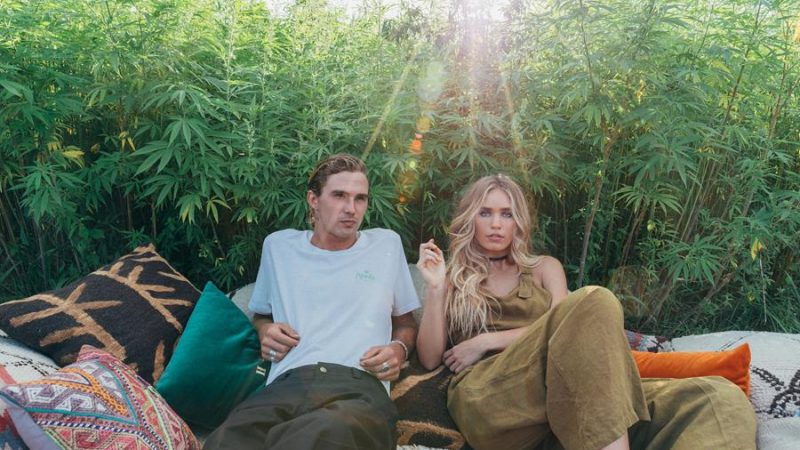
Let’s face it, the fashion industry is an environmental disaster.
As of 2020, the industry accounted for 10% of all global greenhouse gas emissions and 20% of wastewater.
We’ve all seen those photos of discarded clothes festering away in landfills, piled up and clumped together like a more colourful and presumably less rancid fatberg.
But fear not, for here are five brands that are working hard to reduce their impact upon the environment and to create a more eco-conscious and sustainable model of fashion.
Afterall, one of the biggest changes we can make to the environment is choosing to spend our money wisely and invest in sustainable, eco-friendly brands and products.
1. Afends

Gone are the days when hemp clothing was worn exclusively by ska-loving hippies and free-party connoisseurs.
Australian brand Afends are using hemp to create stylish, sustainable clothing out of the same stuff you may (or may not) be sprinkling into that spicy rollie of yours right now. I see you Snoop Dogg.
Leading the way in what they call a ‘hemp revolution’, Afends bought 100 acres of farmland in 2021, with the goal of building their own hemp processing facility and overseeing the production of their products from seed to skin.
But their commitment to sustainable materials doesn’t stop there – even their packaging is eco-friendly. Made from corn starch, and 100% compostable, you can simply place the packaging straight in your compost bin and revel in the fact that you look fresh as hell whilst also helping save the planet. Win win.
2. Finisterre

Whether it’s creating wetsuits out of plant-based rubber, or bikinis out of part-recycled fishing nets, Cornish outdoor brand Finisterre place sustainability at the core of their company ethos.
Born out of a deep love for the ocean, Finisterre create stylish, built-to-last products that help facilitate and connect people to the sea.
Not that you would want to wear your Finisterre sweater whilst swimming in the ocean, but the option is there, and you never know, maybe it will spark a new craze. Cold water swimming – but make it cosy.
Finisterre even offers a repair service so that your clothing can last longer, and one less jacket can make its way to a landfill this year.
3. Patagonia

Patagonia is a world-renowned outdoor and adventure-wear brand leading the way in sustainable business practices.
The brand uses a high proportion of eco-friendly materials in their clothing, with their latest range consisting of 87% recycled materials.
Unlike many brands, Patagonia are acutely aware of their own role as a fashion company in the ever-pressing face of climate change.
With strong commitments to fair-trade labour, renewable energy, and regenerative soil practices, Patagonia are working hard to reduce their impact upon the environment, whilst creating timeless and enduring outdoor clothing.
https://www.patagonia.com/home/
4. Levi’s
Levi’s state that their mantra is ‘Buy better. Wear longer.’
Well, you need only to look back at that one bloke from your hometown who’s worn the same double-denim outfit for the past 40 years to realise that Levi’s really are creating products that last.
Levi’s are continuously working to create even more durable products, using more sustainable materials (such as hemp), and encouraging their customers to wear each piece for longer.
The brand also plans to reduce their supply chain water usage by 80% and has set a science-based target to reduce the amount of greenhouse gas emissions generated by their operations and their supply chain.
https://www.levi.com/GB/en_GB/
5. STORY mfg.

Perhaps the priciest brand on this list, but also the most unique.
Based in the UK, STORY mfg. use largely natural dyes and natural materials to create unique and authentic clothing with sustainability and eco-focused goals in mind.Like many sustainable brands, STORY mfg. create items that are built to last, and view waste in the clothing process as nothing shy of laziness.
Everything the brand produces is built with nature and the planet in mind. All the items are vegan, cruelty-free, and are reminiscent of something your nan might knit for you had she had been raised in a forest by extremely fashionable and well adept wolves.
-
HELLO
Introduction posts always remind me of that gut wrenching moment when you’re in a circle of new people and suddenly you need to summarise your life, your personality, and your hobbies/interests in four sentences or less. It’s an awful feeling, and one we’ve all felt. So, I’m just going to let this blog speak for itself.
Enjoy.

-
Subscribe
Subscribed
Already have a WordPress.com account? Log in now.
 Taryn McDonnell